Trahira in Uruguay: seasons, size limits and techniques
Trahira: rules in 3 regions. Open year-round everywhere. Minimum size: 40 cm. Best months: October to April.
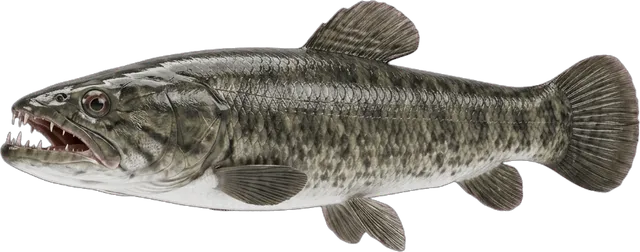
What FishMan anglers report
41 catches logged in Uruguay by 37 FishMan anglers. Public catches logged in the app, without precise locations.
Dates and sizes by region
- Best time
- Open
- Closed
Year-round
minimum 40 cm
- CARU also sets 33 cm standard length (snout to the base of the tail, tail fin excluded): the stricter rule is the one that counts.
- On the Uruguay River a lure may keep only one working hook (the first, others removed or closed), barbless (CARU Res. 59/12).
Resolución DINARA 213/018: especies de agua dulce con pesca prohibida y tallas mínimas de desembarque y comercialización (PDF oficial)Resolución CARU 59/12 (modifica Res. 8/98): especies vedadas, tallas mínimas en largo estándar, artes de pesca deportiva en el río Uruguay
Year-round
minimum 40 cm
- DINARA minimum landing and sale size (Res. 213/018): follow it too when you keep a fish.
- Upstream of Rincón del Bonete, commercial fishing closes 15 Oct to 15 Nov (DINARA Res. 68/019): release spawners.
- No licence is needed for recreational fishing in Uruguay (Law 19.175, art. 44); selling your catch is banned.
Resolución DINARA 213/018: especies de agua dulce con pesca prohibida y tallas mínimas de desembarque y comercialización (PDF oficial)Resolución DINARA 68/019: veda anual de pesca comercial del 15/10 al 15/11 en la Zona I (Río Negro aguas arriba de Rincón del Bonete)Decreto 115/018, reglamento de la Ley 19.175 (art. 18 pesca deportiva libre, art. 129 represas, art. 133-134 artes deportivas) - IMPOLey 19.175 de Pesca Responsable, art. 44 (pesca deportiva libre) y art. 45 (prohibida la venta) - IMPO
Year-round
minimum 40 cm
- The 1 Oct to 15 Dec closure on Laguna Merín applies to commercial fishing (DINARA Res. 302/025): release spawners.
- On the Brazilian side of the lagoon, the Yaguarón and the Cuareim, Brazilian rules apply.
- No licence is needed for recreational fishing in Uruguay (Law 19.175, art. 44); selling your catch is banned.
Resolución DINARA 213/018: especies de agua dulce con pesca prohibida y tallas mínimas de desembarque y comercialización (PDF oficial)Resolución DINARA 302/025: veda de pesca comercial de tararira, bagres y pejerrey en la Laguna Merín del 1/10 al 15/12 (PDF oficial)Decreto 115/018, reglamento de la Ley 19.175 (art. 18 pesca deportiva libre, art. 129 represas, art. 133-134 artes deportivas) - IMPOLey 19.175 de Pesca Responsable, art. 44 (pesca deportiva libre) y art. 45 (prohibida la venta) - IMPO
Where do you find this fish?
All over the country: lagoons, oxbows, reservoirs (Rincón del Bonete, Palmar), rice canals and weed edges.
Which techniques work?
- Topwater lures
- 7-10 cm poppers, stickbaits and frogs, with long pauses over the weeds.
- Weedless soft plastics
- 10 cm shad or worm rigged weedless, cast into the weeds and retrieved slowly.
- Live bait
- Small live fish under a float by the reeds, set the hook firmly.
What gear do you need?
6 ft medium rod, 20-30 lb braid, heavy fluorocarbon or thin steel leader.
How should you fish each season?
- Spring
- She guards nests by the weeds: slow topwater lures, and release the big females.
- Summer
- Fish early and late with soft frogs and poppers in the holes of weed beds.
- Fall
- Still active until the first cold snaps: spinnerbaits and spoons along the edges.
- Winter
- Sluggish: slow soft plastics near the bottom in the warmest hours.