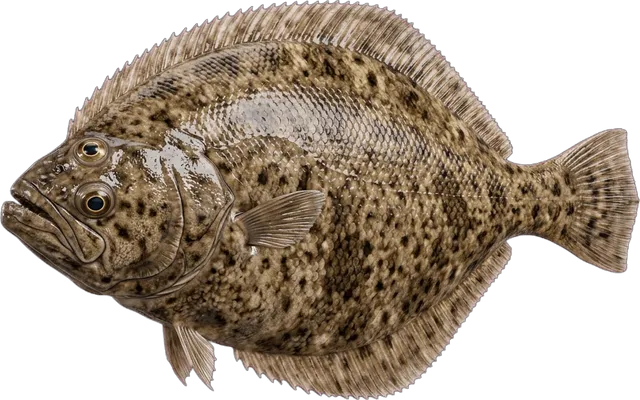
Brazilian flounder in Uruguay: seasons, size limits and techniques
Brazilian flounder: rules in 2 regions. Open year-round everywhere. Best months: October to March.
Dates and sizes by region
- Best time
- Open
- Closed
Year-round
No general limit
- No official closed season, minimum size or bag limit found for recreational fishing.
- No licence is needed for recreational fishing in Uruguay (Law 19.175, art. 44); selling your catch is banned.
Decreto 115/018, reglamento de la Ley 19.175 (art. 18 pesca deportiva libre, art. 129 represas, art. 133-134 artes deportivas) - IMPOLey 19.175 de Pesca Responsable, art. 44 (pesca deportiva libre) y art. 45 (prohibida la venta) - IMPO
Where do you find this fish?
Coastal lagoons of Rocha and Maldonado, lagoon mouths and sandy beaches; also in the outer Río de la Plata.
Which techniques work?
- Soft plastics
- 7-10 cm shad on a 10-20 g jighead, hopped slowly along the sand.
- Live bait
- Small live fish or shrimp on a 1/0 hook, light sliding sinker.
What gear do you need?
7-9 ft rod, 15-20 lb braid, 0.40 mm fluorocarbon leader.
How should you fish each season?
- Spring
- It moves into the lagoons: slow soft plastics hugging the bottom.
- Summer
- Fish the lagoon mouths on the rising tide with small live bait.
- Fall
- Still on the beaches: live bait or soft plastic dragged over the sand.
- Winter
- Deeper: fish slowly during the mildest hours.