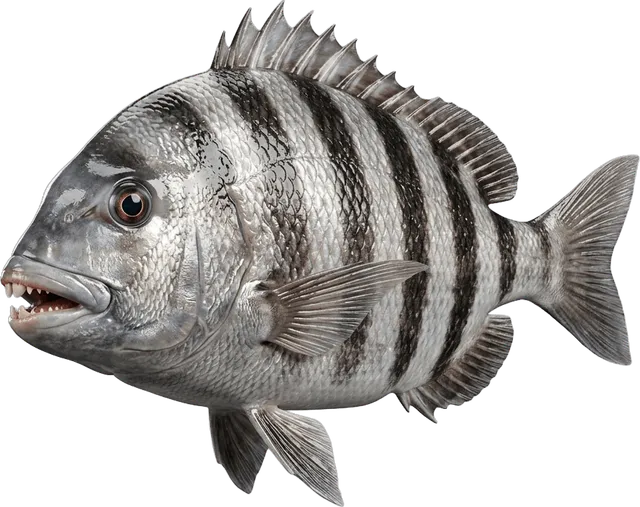
Sheepshead in the United States: seasons, size limits and techniques
Sheepshead: rules in 7 regions. Open year-round everywhere. Minimum size: 10 in (25.4 cm) to 15 in (38.1 cm). Daily limit: 5 to 15. Best months: January to April.
Dates and sizes by region
- Best time
- Open
- Closed
Year-round
minimum 14 in (35.6 cm), 5 per day
Year-round
minimum 14 in (35.6 cm), 10 per day
Year-round
minimum 10 in (25.4 cm), 15 per day
- Size measured as fork length.
Georgia DNR Coastal Resources 2026-2027 (eRegulations), Finfish Seasons, Limits, Sizes
Year-round
minimum 12 in (30.5 cm), 8 per day
- In March and April, 50-fish vessel limit. Snatching prohibited.
- Florida marine rules apply out to 3 nautical miles on the Atlantic side and 9 miles on the Gulf side.
Year-round
minimum 12 in (30.5 cm), 8 per day
Year-round
minimum 14 in (35.6 cm), 15 per day
Year-round
minimum 15 in (38.1 cm), 5 per day
- A Texas fishing license with a saltwater endorsement is required.
TPWD Outdoor Annual 2026-27: sheepshead bag and length limits
Where do you find this fish?
Bridge and dock pilings, jetties, wrecks, oyster bars and nearshore reefs.
Which techniques work?
- Bait tight to structure
- Fiddler crab, barnacle or shrimp on a small strong #1-1/0 hook, sinker right at the piling.
- Fiddler jig
- 1/4-1/2 oz jighead tipped with a crab, dropped vertically along structure.
Which lures and baits should you use?
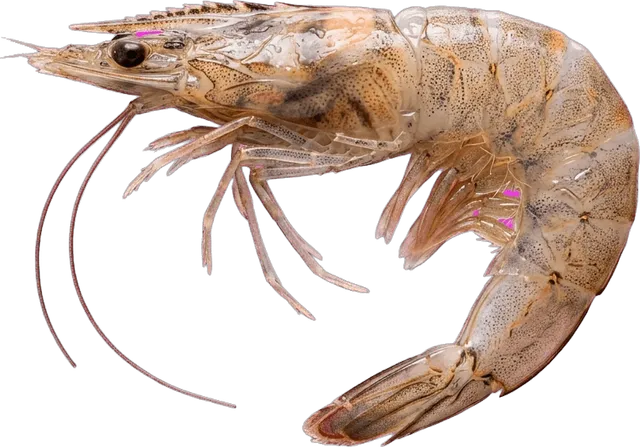 Live Shrimp
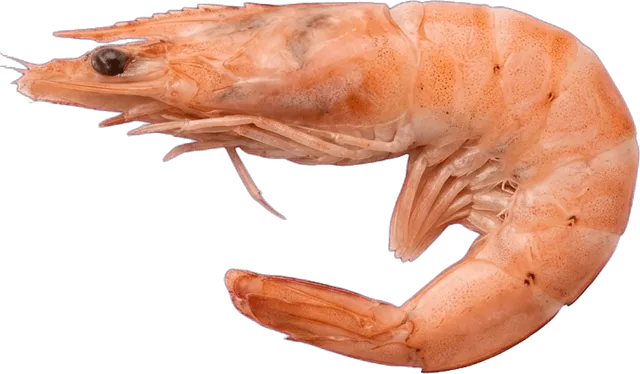 Dead Shrimp / Prawn
What gear do you need?
Short, stiff 6-7 ft rod, 20-30 lb braid and a 20-30 lb fluorocarbon leader.
How should you fish each season?
- Spring
- End of the spawn: still plenty on jetties and wrecks.
- Summer
- Spread through estuaries: fish shaded pilings with fiddler crabs.
- Fall
- They gather on structure as the water cools.
- Winter
- Peak spawning on reefs and jetties: the biggest fish of the year.